Changing weather conditions remained a major driver of disease during August. An unusually warm winter was interrupted by short periods of severe cold, resulting in livestock losses in some areas, while the generally warmer conditions allowed parasites and vectors to remain active much later than expected.
Wireworm continued to be reported in sheep into August, while blue ticks and associated tick-borne diseases, particularly anaplasmosis, persisted throughout winter. Producers should use early spring to assess parasite burdens and confirm that current control products remain effective.
In cattle, difficult calvings and associated vaginal and uterine prolapses dominated disease reporting. Increasing reports of inkberry poisoning were also received, with cases reported in cattle, sheep and occasionally goats.
As veterinarians begin testing bulls ahead of the next breeding season, increasing numbers of trichomoniasis and vibriosis cases are being identified. With commercial vaccines no longer readily available, early diagnosis and structured herd management become particularly important.
Foot-and-mouth disease reports declined considerably across most provinces following the first round of vaccination, although new outbreaks continue in areas where the disease has not previously occurred.
Looking ahead to spring, early reports of midges and favourable vector conditions increase the potential risk of bluetongue. Rainfall in the Northern Cape and Free State also increases concern around Rift Valley fever following cases at Augrabies during late 2025.
This month’s report focuses on Inkberry Poisoning, Trichomoniasis and Vibriosis, Bluetongue and Rift Valley Fever.
For the first time in months Foot-and-mouth-disease is not the main problem reported by veterinarians regarding cattle. With the availability of vaccines that can be privately acquired from later in August through private veterinarians on the RMIS ordering system, farmers will also have the opportunity to protect their own herds if they were not vaccinated by the state veterinary services before.
In beef cattle we are now at the start of the main calving season and reports regarding calving and problems like difficult calvings and prolapses do dominate the reporting by veterinarians who are very involved in providing a support service.
Blue tick numbers remained unexpectedly high even now in July which is a specific trend that will need specific management during the spring in order to break the life cycle of these ticks.
Pneumonia cases reported during July were lower than expected due to the winter that was milder than expected, except for severe cold fronts that swept over the country but most of them only lasted for 3 to maximum 5 days. In most areas the total number of days with frost was less than normal. The involvement of the veterinarian is very important in the choice of vaccine to prevent or antibiotic to treat effectively.
In sheep, internal parasites and specifically wire worm remained the leading disease problem, even in July which is a very abnormal trend, and possible resistance of these parasites against deworming remedies must be investigated.
More integrated parasite management, in consultation with the flock veterinarian will be needed on sheep farms where wireworm became the first limiting factor to sustainable production.
Foot-and-mouth disease remained an important national concern during June, with further outbreaks reported in the Eastern Cape, southern Free State and Northern Cape. Although this continued to dominate disease discussions, several unusual seasonal disease trends were also reported.
Blue tick numbers remained unexpectedly high well into winter, resulting in continued reports of African redwater, Asiatic redwater, anaplasmosis and heartwater in endemic areas.
The unusually late survival of adult female ticks is expected to increase spring larval numbers, making strategic spring tick control particularly important. If this early season tick population is not effectively contained, it will present a major challenge later in the season.
Pneumonia remained one of the most important disease challenges in both sheep and cattle. Continued fluctuations in temperature and winter weather conditions are expected to maintain disease pressure throughout July.
In cattle, veterinarians reported increasing numbers of abortions requiring investigation, together with an unusually high number of difficult calvings. In sheep, internal parasites remained the leading disease problem, while increasing reports of coccidiosis and sheep abscesses highlighted the importance of accurate diagnosis and long-term disease prevention.
This month’s report focuses on abortion investigations, difficult calvings, sheep abscesses and strategic spring tick planning.
Foot-and-mouth disease continued to dominate disease discussions during May, with outbreaks increasingly reported from areas that were previously unaffected, including parts of the Northern Cape, the western and southern Free State, and commercial farming areas of the Eastern Cape.
The transition from autumn to winter created challenging conditions for livestock across much of South Africa. Continued rainfall, flooding in some regions and repeated cold fronts resulted in large fluctuations in temperature, creating favourable conditions for respiratory disease, parasite-related problems and nutritional disorders.
Pneumonia cases increased during May and are expected to remain one of the most important disease challenges during the winter months. These outbreaks are often associated with sudden weather changes, cold stress and management events such as weaning.
During April, foot-and-mouth disease still dominated disease discussions, but several other important seasonal disease trends also increased.
The continued wet conditions across many parts of the country, followed by colder winter-like temperatures, created favourable conditions for both parasite-related and respiratory disease challenges.
In sheep, wireworm remained the number one disease problem, while increasing cases of pulpy kidney and lameness/foot problems were also reported. The combination of lush grazing conditions, high parasite burdens and deworming of affected sheep likely contributed to this increase in cases during April.
In cattle, blue tick numbers remained unusually high late into the season, together with the associated cases of tick-borne diseases such as Asiatic redwater, African redwater and anaplasmosis.
Pneumonia cases have started increasing, particularly in sheep, and this trend is expected to continue during the colder winter months ahead.
Although new cases of foot-and-mouth disease was still dominating in March this report will focus on the other diseases that occurred at the same time. As in the previous month the high rainfall in the summer rainfall areas were the driving factor, with the only change that causes a slow down in seasonal disease trends was caused by the lower average temperature.
Internal parasites, especially wire worm in sheep stayed the number one problem but the cases of liver fluke were less than predicted, because less than normal transmission take place in the waterlogged areas, that is not receding like normally in the autumn.
Bluetongue cases transmitted by midges were high but less than the previous year.
Large increase in blue ticks in cattle together with the diseases that is transmitted by these ticks especially Asiatic and African redwater.
The upcoming trend is cases of pneumonia especially in sheep but cases in cattle can also increase especially after weaning of the calves.
During February, the incidence of livestock diseases was still dominated by the continued incidence of foot-and-mouth disease, and the start of the vaccination campaign with the first vaccines received.
Furthermore, climatic factors, especially the continued and high rainfall, drove the disease trends. Internal parasites, especially wire worm in sheep and liver fluke caused losses and it is predicted that liver fluke and then conical stomach fluke cases will increase in the next 2 to 3 months in the specific areas where they do occur.
The insect-borne diseases also caused major problems with outbreaks of lumpy skin disease that occurred and to a lesser extent three-day stiff-sickness in cattle and bluetongue in sheep, which did pose a major challenge in specific areas. The single case of Rift Valley Fever that occurred in the Northern Cape at the end of last year fortunately did not spread further and this offers producers this winter the opportunity, to get vaccinations up to date.
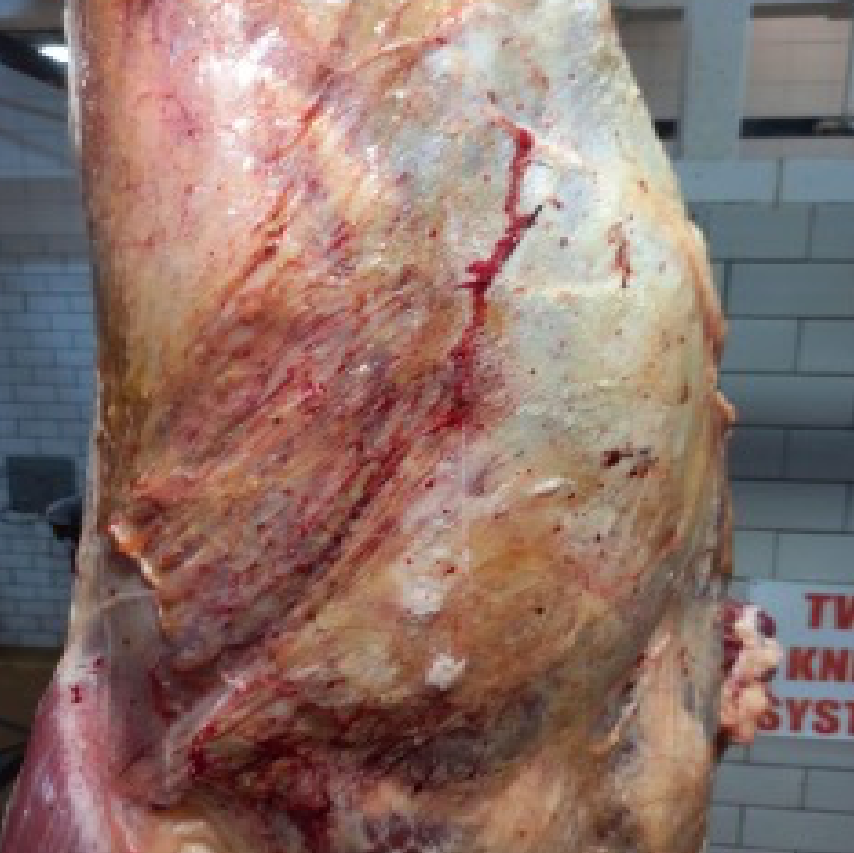
Parafilaria historically has been relatively geographically limited, but we are starting to see it spread further. It can be identified on farm by the characteristic bleeding spots seen at this time of year but is not visible in possibly infected weaner cattle going into the feedlot.
The Start of Bleeding
Visible Bleeding Spots
Severely affected cow
Parafilaria causes significant economic losses when untreated cattle are slaughtered, and parts, or the whole, of the carcass are condemned. Cost-effective treatments are available at both farm and feedlot level but requires awareness that the cattle are being exposed to the disease and timeous treatment pre-slaughter.
Where farmers are feeding and slaughtering their own cattle, awareness of this disease in their area can allow them to proactively limit significant losses and ensure that the disease is effectively managed.
Consult your vet if any signs of this disease are observed, so that appropriate treatment protocols can be established to limit exposure, and the broader industry can be aware of the distribution and process livestock accordingly to limit the cost of disease.
It is essential that the veterinarian in charge of the health program at a feedlot know the origin of calves in order for the correct treatment at the start of the feedlot phase and/or action follow up treatments if needed
Background Information
Parafilaria is a filarial roundworm that lives under the skin in cattle. The adult female worm makes a small hole through the skin where she deposit eggs/larvae. Flies are attracted to these wounds, and when feeding on the blood they will ingest the larvae, which will then develop further in the fly.
The third stage of the larvae is then transmitted to cattle when the fly feeds on eye secretions or small wounds on the cattle. The larvae will migrate to areas under the skin of the neck, over the ribs or the flank of cattle where they then grow into adults over the next 7-10 months before the females make a small hole again to deposit her eggs.
The Economic Loss Caused by Parafilaria
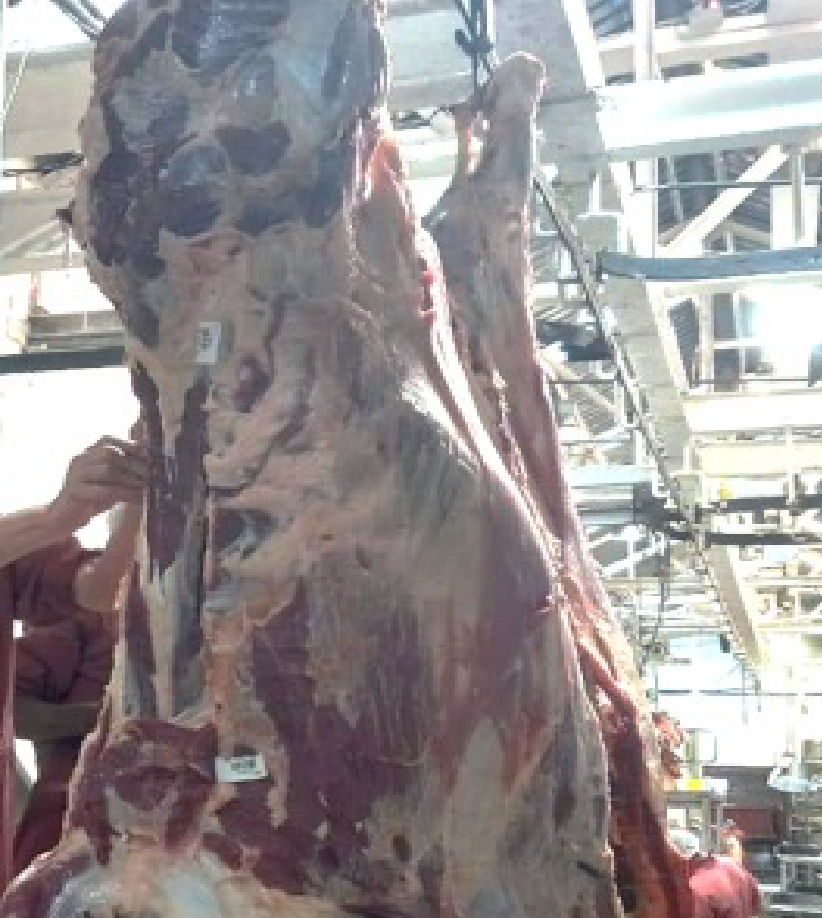
Although the worms under the skin don’t cause a severe production loss in cattle, the loss arises when these cattle, or their offspring, are slaughtered. The migrating worms under the skin cause lesions, called false bruising. These must be trimmed out at slaughter.
It can lead to losses of 0,5kg or more per lesion, and in severely affected carcasses the whole carcass is condemned for human use. Thus, losses of between R30 (single trimmed lesion) to more than R10 000 if carcass is condemned can be incurred.
Visible lesions on a carcassSignificant lesions being cut out of a carcass
Disease Distribution
Parafilaria mostly occurs in the warm bushveld areas of Limpopo, North-West and Kwazulu-Natal but the parasite is spreading to more areas as reported by veterinarians through the disease reporting system.
Disease Prevention
To prevent losses at slaughter, cattle, and specifically weaner calves that go through a feedlot phase, must be treated against parafilaria at least 60 days before slaughter for the filarial worms to be killed and the lesions to heal. Although calves from affected areas can be infected with parafilaria, they will not show bleeding spots during the 120 day feedlot phase due to the long development period of the worm of 7-10 months.
It is essential that the veterinarian in charge of the health program at a feedlot know the origin of the batches of calves in order to advise on the correct treatment at the start of the feedlot phase and/or follow up treatments if needed. Better awareness of this disease will reduce the cost of disease on the industry, at no cost to the farmer.
Copper poisoning in livestock has become a concern when animals are fed poultry litter from birds raised on diets containing copper as an additive. An alert was issued by Rainbow to all their contract growers that CuSO4 (cupric sulfate) is being added to the diet of ALL Rainbow Broiler Farms and as such litter from these farms is not suitable for livestock feed.
This practice can lead to elevated copper levels in the litter, potentially resulting in toxicity in livestock that consume it. Symptoms of copper poisoning can include lethargy, jaundice, red urine and death is severely affected animals. On the postmortem examinations done by the veterinarian the following macroscopic lesions were seen as in the pictures below.
It is crucial for livestock producers to be aware of the feed sources they utilize and to monitor for any signs of disease and consult with a veterinarian or nutritionist in the case where animals show signs of disease. Understanding the risks associated with copper in feed can help prevent adverse health outcomes in livestock.
Figure 1: Jaundice (yellow discoloration) of the carcass from copper poisoning
Figure 2: Yellowish liver
Figure 3: Dark red to purple (gun blue) kidneys from affected carcass which is very typical for chronic copper poisoning
To provide the best experiences, we use technologies like cookies to store and/or access device information. Consenting to these technologies will allow us to process data such as browsing behavior or unique IDs on this site. Not consenting or withdrawing consent, may adversely affect certain features and functions.
Functional
Always active
The technical storage or access is strictly necessary for the legitimate purpose of enabling the use of a specific service explicitly requested by the subscriber or user, or for the sole purpose of carrying out the transmission of a communication over an electronic communications network.
Preferences
The technical storage or access is necessary for the legitimate purpose of storing preferences that are not requested by the subscriber or user.
Statistics
The technical storage or access that is used exclusively for statistical purposes.The technical storage or access that is used exclusively for anonymous statistical purposes. Without a subpoena, voluntary compliance on the part of your Internet Service Provider, or additional records from a third party, information stored or retrieved for this purpose alone cannot usually be used to identify you.
Marketing
The technical storage or access is required to create user profiles to send advertising, or to track the user on a website or across several websites for similar marketing purposes.