
Steps Apply for a permit

Search For Post
Filter By Category
Select some options
Filter By Post Date
Select Date

RMIS Appointments Biosecurity Marshal
Red Meat Industry Services (RMIS) has appointed Commandant Jan J. Nel as a Biosecurity Marshal—an independent role authorised under the Animal Diseases Act, 1984 (Act 35 of 1984) by the Department of Agriculture, Land Reform and Rural Development (DALRRD).
Animal disease outbreaks, such as Foot-and-Mouth Disease (FMD), pose a significant threat to the South African livestock industry. In response, RMIS and the Directorate: Animal Health, is taking proactive steps to enhance disease monitoring, enforce compliance, and strengthen biosecurity protocols across the industry. The appointment of Commandant Nel is a vital step in reinforcing biosecurity measures and safeguarding South Africa’s livestock industry against controlled animal diseases.
As part of RMIS’s 2025 strategic initiatives, the newly appointed Biosecurity Marshal will:
- Investigate epidemiologically linked locations, animals, and businesses suspected of disease involvement.
- Monitor compliance with biosecurity measures at farms, auctions, transport points, abattoirs, and roadblocks.
- Enforce movement restrictions of cloven-hoofed animals and conduct inspections.
- Collect data and compile reports on disease control infractions, working closely with the
- National Prosecuting Authority on legal actions where necessary.
- Liaise with state veterinarians and industry stakeholders to ensure disease control effectiveness.
This initiative aligns with RMIS’s 2025 Project Portfolio, aimed at enhancing traceability, market access, and disease prevention within South Africa’s red meat sector. By deploying biosecurity marshals, RMIS is reinforcing the industry’s resilience, improving trade confidence, and ensuring livestock health and welfare.
“After 37 years of dedicated service in government agriculture, particularly in veterinary services and law enforcement, I am proud to continue my commitment to South Africa’s livestock producers through RMIS,” said Commandant Jan J. Nel. “Strengthening biosecurity and enforcing compliance and traceability at all levels of the value chain is critical to protecting our industry.”
“Our focus remains on building a sustainable and globally competitive red meat industry,” said Dewald Olivier, CEO of RMIS. “The introduction of Biosecurity Marshals will strengthen our disease response framework, ensuring that South African red meat producers operate in a safe and compliant environment.”

RMIS 2025 Project Portfolio, Shifting into High Gear for Growth in the Red Meat Industry
Red Meat Industry Services (RMIS) has announced its ambitious 2025 Project Portfolio, a comprehensive plan aimed at advancing innovation, sustainability, and inclusive growth within South Africa’s red meat industry. Following a successful first full year of operations in 2024, RMIS is set to build on its achievements with ten strategic initiatives, backed by a R50 million budget, aligned with the Red Meat Industry Vision 2030.
Key Achievements in 2024: Laying a Strong Foundation
RMIS made significant strides in 2024, delivering high-impact projects across the red meat value chain:
• Traceability Platform Launch: Phase 1 successfully introduced unique, internationally recognized production unit numbers, enhancing industry transparency
• Interactive Dashboards: RMIS deployed statistical dashboards to track national disease occurrences, slaughter data, and market trends in collaboration with over 200 veterinarians.
• Mobile Processing Units (MPUs): Piloted in communal and emerging farming areas, these units processed over 2,000 cattle, improving market access for small-scale farmers.
• MeatMENTOR Program: A 12-module enterprise development initiative supporting technical and business skills within the industry.
• Capacity Building: Over 500 industry professionals trained, 3,400+ farmers engaged, and 5,000+ webinar views recorded.
• Consumer Education: Initiatives such as Beef & Lamb SA, YouTube Shorts, and social media campaigns helped promote red meat’s nutritional benefits.
• Grade 12 Agricultural Educator E-Learning Platform: A pioneering digital resource to equip teachers with the tools to effectively teach livestock studies.
RMIS 2025 Project Portfolio: Strengthening South Africa’s Red Meat Industry
Aligned with RMIS’s mission to advance the primary red meat industry, the 2025 portfolio includes a mix of ongoing and newly emphasised initiatives thatleverages technology and strategic partnerships to overcome critical challenges and unlock new opportunities.
| 1) Data sharing and communication platform (Traceability) | R 6 000 000 | 12% |
| The continuation of Phase 1 of the industry-driven Traceability Platform which was launched on 1 November 2024. It focuses on identifying production units within the value chain, including farms, communal lands, auction houses, feedlots, abattoirs, and processing facilities and linking a certified global number that is unique to the location. The next phases will focus on developing the traceability data platform and integrating independent recordkeeping systems to enable seamless data sharing. Key elements such as minimum traceability data requirements, data sharing standards, tag accreditation, and a unified numbering system will be established to ensure compliance. The traceability platform is designed to address critical issues, including disease management and stock theft prevention, while enhancing trade opportunities through improved data transparency and expanding market access to both the commercial value chain and export markets. | ||
| 2) Inclusive Growth | R 10 000 000 | 20% |
| Mobile Processing Units & Training: Supporting farmers with essential livestock management practices directly on their farms, diptanks or in communal areas. These state-of-the-art units are fully equipped with a body crush, neck clamp, electronic scale and a variety of animal handling tools to facilitate tagging, branding, dehorning, and vaccinations efficiently and humanely. Operated by a qualified production specialist who will also facilitate comprehensive training based on gaps identified. The focus for 2025 will be on the practical implementation of the mobile units to ensure that animals are vaccinated, treated and tagged to enhance productivity, profitability, and market access through traceability. Land Development Support Programme (Self-funded)RMIS has been appointed as the implementing body for the LDS programme on behalf of DALRRD, overseeing a five-year initiative in all nine provinces. The programme aims to commercialise small-scale farmers through enterprise development, practical implementation and mentorship. Since the launch of the LDS program, RMIS has evaluated 45 farms and submitted comprehensive business plans for each. Out of these, 16 have been approved, with 9 already in the implementation phase. The current project value stands at R350 million. | ||
| 3) Industry Animal Health Recording System | R 800 000 | 1% |
| In 2024, a statistical dashboard was developed and integrated into the RMIS website to share veterinary data on national disease occurrences, in collaboration with Veterinarian Network, providing a comprehensive view of animal health trends across the country. The continuation of this project in 2025 focuses on maintaining data collection processes, improving data accuracy, and enhancing analysis and communication. These advancements aim to empower producers and veterinarians with actionable insights, enabling proactive treatment strategies to mitigate the impact of diseases effectively. | ||
| 4) Industry Meat Safety | R 6 600 000 | 13% |
| The Red Meat Industry Animal Public Health (RMI APH) services will continue to ensure meat safety and training in abattoirs. Meat classification and safety audits will also continue to uphold processes to deliver quality and safe meat. Furthermore, new software development and the creation of Standard Operating Procedures are underway to digitise the collection of meat safety and residue data. These advancements aim to enhance efficiency in tracing non-conformances and addressing meat safety issues. | ||
| 5) Certified South African Red Meat | R 1 000 000 | 2% |
| This project focuses on enhancing quality assurance across the entire value chain while ensuring compliance with international standards and regulations. A key initiative is the international benchmarking of industry standards through ISO accreditation for various regulations within the value chain. Additionally, the project aims to integrate certifications for farms, feedlots, and abattoirs into a unified certification stamp. This consolidated stamp will provide consumers with assurance of traceability, biosecurity, animal welfare, and meat safety, reinforcing confidence in South African red meat products. | ||
| 6) Stock Theft | R 2 000 000 | 4% |
| This project focuses on establishing an industry digital stock theft reporting strategy to streamline the reporting and tracking of incidents. A key objective is to collect, share, and display relevant data, enabling stakeholders to make informed, data-driven decisions. Additionally, it aims to identify and prioritise effective interventions to prevent stock theft, safeguarding livestock and supporting the livelihoods of producers within the red meat value chain. | ||
| 7) Producer/Production Development through communication | R 5 500 000 | 11% |
| A significant communication gap within the red meat industry has been identified, prompting an increase in the project’s focus and budget allocation. This undertaking aims to enhance communication around industry initiatives while fostering production development through targeted support. It seeks to empower producers by providing the knowledge, resources, and communication channels needed to drive sustainable growth and innovation throughout the red meat industry. Exciting initiatives for 2025 include the launch of a podcast series, interactive data accessibility, digital national disease alerts integrated with WhatsApp, and the rollout of the industry digitisation roadmap. | ||
| 8) Consumer Education | R2 500 000 | 5% |
| Beef and Lamb SA: This initiative aims to promote red meat consumption by engaging directly with consumers through strategic collaborations with social media influencers. By sharing scientific insights and intriguing facts, the project seeks to educate the public about the nutritional benefits, sustainability, and versatility of red meat, fostering informed consumption choices and strengthening consumer confidence in the industry. An additional focus area for 2025 will include addressing the skills gaps of butcheries and blockmen and to promote product development. Agricultural Educators E-Learning program: In collaboration with the Department of Education, this initiative is designed to support secondary school agricultural teachers with an e-learning platform tailored specifically to the livestock component of their curriculum. The platform offers valuable resources to aid in lesson preparation and ongoing professional development. Following the successful establishment of the platform in 2024, the 2025 phase focuses on its implementation, maintenance, and continuous improvement. By ensuring educators have access to high-quality, practical tools, this program aims to enhance their classes and play a pivotal role in shaping the next generation of agricultural professionals. | ||
| 9) Research & Development | R 9 000 000 | 18% |
| This initiative emphasises the implementation of a Functional Research Structure within the red meat industry. Recognising the vital role of research in maintaining industry competitiveness, RMIS is committed to ensuring that all research efforts deliver significant contributions to the industry’s advancement. By prioritising impactful and innovative studies, this project aims to prevent stagnation and drive continuous improvement across the red meat value chain. Current research includes beef grading and ESG framework and calculator for the red meat industry. | ||
| 10) Biosecurity Marshals & RMI APH | R 7 000 000 | 14% |
| This initiative aims to strengthen biosecurity defences within the livestock industry by introducing the concept of biosecurity marshals. The 2025 focus will centre on developing and piloting this innovative approach, while fostering critical public-private partnerships (PPPs) to enhance its effectiveness. Additionally, a dedicated Red Meat Industry Animal Public Health (RMI APH) officer will be appointed to oversee all animal health initiatives, ensuring comprehensive management and coordination of industry-wide health efforts. | ||
As RMIS accelerates into 2025, its focus remains on achieving the goals as set out in the Red Meat Industry Vision 2030. With a clear strategy and dedicated investment in these initiatives, RMIS can strengthen South Africa’s red meat value chain—empowering farmers, improving market access, and promoting the benefits of high-quality, nutritious red meat.

RMIS Launches Grade 12 Agricultural Sciences Educator Resources, Sponsoring 600 Licences.
The Red Meat Industry Services (RMIS), in partnership with MyLife and Sagritex, has developed a comprehensive online support platform for Grade 12 Agricultural Sciences educators. This new resource is designed to refresh teachers’ subject knowledge, streamline lesson preparation, and enrich classrooms through blended learning materials aligned with the Curriculum and Assessment Policy Statement (CAPS).
Developed by experienced South African educators, the programme places a particular emphasis on livestock studies while covering the entire Grade 12 Agricultural Sciences syllabus. It includes 234 video resources, exam-related questions and answers, fascinating facts, and a full annual overview.
To make these materials widely accessible, RMIS is sponsoring 600 licences nationwide. Educators can apply for a sponsored licence on a first-come, first-served basis, allocated proportionally across provinces according to the number of schools offering the subject.
The first call for applications was distributed by the Department of Basic Education via its official channels at the end of last year (both nationally and via provincial subject coordinators). Educators apply in their personal capacity, and the licences are awarded to individuals rather than schools. Any Agricultural Sciences Grade 12 educator is eligible to apply. As of 6 January, 40% of the available sponsored licences have already been issued.
Educator Feedback
Two educators who have already applied for and received a sponsored licence had this to say about the programme:
Stanley Tshwale, Tembisa CLC:
“I reviewed your Grade 12 Agricultural Sciences online project and found that it provides great resources for producing excellent results. It even includes economics lessons. I have learned a lot from your online teaching materials.”
Barbara Cronje, Hoёrskool Swartland:
“It is very complete. There are clear definitions and sketches included.”
How to Apply
1. Find and complete the online application form here: https://rmis.co.za/educator-resources/
2. Submit by Friday, 17 January, or before all sponsored licences are allocated.
3. Successful applicants will receive confirmation via email by 24 January or once allocations are finalised.
Dewald Olivier, RMIS CEO, commented: “We recognise the importance of equipping educators with relevant, high-quality resources. Our partnership with MyLife and Sagritexenables us to make a tangible difference at a grassroots level, which will ultimately benefit South African learners and the future of the agricultural sector.”
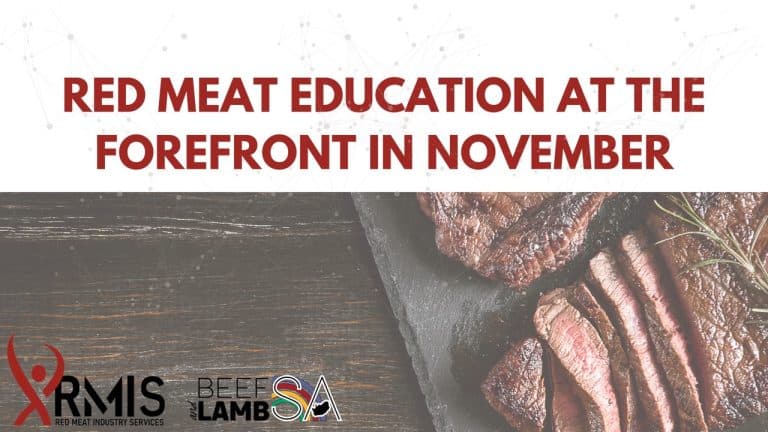
Red Meat Education at the Forefront in November
In November, Beef & Lamb SA, the consumer education function of RMIS, hosted two events that aimed to enrich consumer knowledge about red meat, specifically targeting students andinfluencers.
Feedlot Challenge & Consumer Science Cookoff
On 1 November, Beef & Lamb SA joined the University of Pretoria at the annual final-year sheep Feedlot Challenge, which concluded with an exciting Lamb Cookoff. The Lamb Cookoff,in partnership with the Department of Consumer and Food Sciences, gave Animal Science and Culinary Arts students a hands-on experience with lamb cuts.
The event began with a carcass-cutting demonstration by an expert butcher from MondanetteIrene Butchery, who explained the value of each lamb cut and shared techniques for optimisingthe use of an entire carcass. Following this demonstration, students used a range of cuts to prepare an impressive harvest table featuring dishes like a Lamb Rack crown and bao buns with pulled lamb shoulder.
Marina Fourie, Beef & Lamb SA’s project manager, highlighted the significance of the event in enhancing students’ understanding of the butchery process and value chain. The winners of the Feedlot Challenge will be announced at the Animal Science department’s final event later in the month. The Feedlot Challenge also received support from Molatek, Kyron Animal Health, Datamars Livestock Scaling Equipment, and the Cavalier Group.
Food Styling and Photography Influencer Workshop
Building on the success of a previous workshop in Cape Town, Beef & Lamb SA hosted its second Food Styling and Photography Workshop for influencers on 2 November at the University of Pretoria. The workshop aimed to assist social media food content creators in honing their skills for presenting red meat in the most appealing way.
Professionals, including food stylist Caro Alberts, photographer Michelle Parkin, and recipe developer Professor Gerrie du Rand, led sessions on optimal lighting, styling, and photography techniques to capture red meat at its most enticing. Additionally, Marina Fourie shared insights on effective content creation, collaborating with brands, and fostering authenticity to enhance social media engagement.
The workshop welcomed 30 influencers, including popular figures like Nelisiwe Mahlangu, Ritshidze Sibadali, and The Lazy Chef. Their subsequent social media posts helped extend the event’s reach, bringing Beef & Lamb SA’s message to an even wider audience with visually compelling red meat content.
By equipping students with butchery and culinary skills and empowering influencers with tools to better style and photograph red meat, Beef & Lamb SA is building a well-informed community that appreciates red meat’s value. These efforts support the spread of accurate information and encourage a positive perception of red meat. Beef & Lamb SA is committed to advancing similar educational initiatives to reach a broader audience with practical, trustworthy insights.

RMIS Traceability Task Team Advances with Key Components in Place
The RMIS Traceability Task Team, formed at the 3 October 2024 meeting, comprises key representatives from industry organisations including the RPO, NALFA-SA, National Department of Agriculture, Cape Wools & NWGA, RMIS, Gendac, and GS1. This week, the team held a follow-up meeting to finalise critical elements of the proposed traceability platform. Progress has been made on essential components that will shape a framework for livestock identification, recordkeeping, and data management.
Key Components Include:
1. Naming of the Industry Traceability System
The traceability system has been named Red Meat and Livestock Identification and Traceability – South Africa.
2. Determining a Specific and Unique Animal Identification Number Protocol
The task team decided that RMIS will issue tag numbers from a centralised platform to recordkeeping systems and tag manufacturers. A centralised number bank enhances credibility and recognition of tag numbers in the comprehensive traceability platformand prevents number duplication. A unique 15-digit number, compliant with international standards, will be used to accommodate all tag technologies (visual, QR-code, low-frequency, and high-frequency).
GS1 introduced its GTIN (Global Trade Item Number) system, explaining its 13-14 digit structure used globally for secure and consistent tracking. The GS1 system, with its flexibility and trade compliance, was selected to align with international traceability standards. The team is also considering the adoption of SGTIN (Serialised Global Trade Item Number) for item-level traceability, as it offers a robust solution for tracking individual animals within production units.
Phase 1 of the traceability platform which was launched on 1 November 2024,involves the identification and numbering of production units throughout the value chain. The number system used for these production units is the GLN (Global Location Number), also provided by GS1, ensuring the integration, compliance, and use of production unit numbers and tag numbers for traceability.
3. Setting Minimum Requirements for Traceability and Data Management Systems
To maintain the integrity of traceability within the industry, a set of minimum requirements and standards were proposed for recordkeeping systems. This will serve as a benchmark for recordkeeping systems that wish to transition into full traceability providers. As part of this initiative, existing recordkeeping systems will have the opportunity to review and provide input on these standards, fostering an inclusive approach to the development process.
4. Specifications and Requirements for Livestock Identification Tags
The team identified international standards for identification tags, including ICAR and PASS 44 & PASS 66 compliance, to ensure that tamper-proof, single-use tags are used. Both tag types and their standards are internationally recognised, which should allow more options for role-players participating on the platform.
A phased implementation plan has been outlined, including a timeline for transitioning from existing numbering systems to the new GS1 standard. Anticipated adjustments and costs for recordkeeping systems to comply with these requirements are also being evaluated to ensure a feasible and effective rollout.
With the RMIS Production Unit Number Application now launched and the decisions made by the Task Team, consultations will commence with various recordkeeping systems and value chain participants for their input and alignment, to ensure participation in reaching comprehensive traceability of livestock and red meat.

RMIS Launches Phase 1 of Comprehensive Traceability System for South Africa’s Red Meat Industry
Red Meat Industry Services (RMIS) is pleased to announce the launch of Phase 1 of a groundbreaking traceability platform, designed to improve transparency, efficiency, and competitiveness in South Africa’s red meat industry. This initiative represents a major step forward in ensuring that every link in the supply chain — from farms to retailers — is accurately tracked and managed.
Phase 1: Identifying Key Locations
The project begins with the identification and numbering of Production Units across every location in the red meat value chain. This includes communal land, commercial farms, auction houses, feedlots, and abattoirs. These Production Unit Numbers will form the foundation of the RMIS Traceability Platform, which aims to:
– Address disease management and enable recalls
– Combat stock theft
– Enhance trade through the sharing of traceability and production data
– Increase market access to commercial value chains and export markets
A Production Unit Number, also known as a Global Location Number (GLN), is the standard used to ensure and enhance value chain, retail and international recognition. RMIS and GS1 South Africa are committed to providing a transparent and trustworthy international standard. The Production Unit Number will be used to verify the location of a seller to a buyer. In future, Production Unit Numbers will also be used to request digitised transport documents (such as Articles 6, 8, and health declarations). Additionally, the integration of various recordkeeping systems with the RMIS Traceability Platform will rely on the Production Unit Number as a location reference for sharing traceability data.
RMIS partnered with a systems development company, Gendac Software Engineering, with 26 years of experience to create a dedicated web application that enables value chain participants to identify production units and request GLN numbers from GS1 South Africa. This web application will support accurate location identification, verification, and visualization on a national map. Each site will be geo-fenced, improving the efficiency of livestock tracking and management.
Following Phases: Capturing and Sharing Traceability Data
After the successful identification of locations, subsequent phases will focus on capturing and sharing essential traceability data through various recordkeeping systems integrated with the RMIS Traceability Platform. This approach promotes decentralized data management while ensuring the standardized sharing of information to maintain data integrity and traceability from production to the end-consumer.
RMIS is currently in the analysis phase of developing a platform to facilitate the standardized sharing of traceability and production data. This platform will meet international standards and effectively support the industry’s traceability needs in collaboration with GS1 South Africa, Gendac Software Engineering, and the RMIS Traceability Task Teams.
Collaborative Effort and Future Outlook
The success of this initiative depends on the collaboration of all stakeholders, including small-scale and commercial farmers, auction houses, feedlots, abattoirs, service providers, and government bodies. Over the past six months, RMIS has worked closely with these groups, and the enthusiasm surrounding the project reflects a shared commitment to building a sustainable and efficient red meat value chain.
According to RMIS CEO, Dewald Olivier: “Traceability could be the most impactful initiative the livestock industry has seen since South Africa became a net exporter of red meat. This initiative as the foundation should, linked with grading and the other initiatives, enable the red meat value chain to achieve its 2030 strategy.”
Dr. Phillip Oosthuizen, RMIS COO, stated: “The success of traceability will depend on an efficient, transparent, and trustworthy platform, a phased implementation approach, and the collaboration of each participant in the value chain.”
The introduction of this traceability platform is expected to significantly enhance the industry’s visibility, competitiveness, and resilience in both local and global markets.

Beef and Lamb SA Celebrates Heritage Month with Red Meat Tag-Train
In September 2024, RMIS’s consumer education function, Beef and Lamb SA, embraced Heritage Month by launching an engaging social media campaign that celebrated South Africa’s diverse culinary traditions. Recognising the importance of red meat in South African heritage, Beef and Lamb SA organised a unique campaign that used social media influencers to showcase different beef cuts and inspire creative recipes.
The Tag-Train Concept
At the centre of the campaign was an innovative initiative called the Tag-Train. The idea behind this was to encourage a chain of influencers to build on each other’s beef-based dishes. It began with one influencer preparing a recipe using a specific beef cut, then challenging another influencer to create their own dish, resulting in a continuous wave of creativity. This campaign aimed not only to celebrate the versatility of beef but also to highlight its deep connection to South African heritage.
Instagram was the primary platform for the campaign, offering a space for food enthusiasts to follow along and engage with the influencers’ content. As each influencer shared their dishes, the ripple effect of engagement and collaboration grew, with followers eagerly waiting to see the next dish in the Tag-Train.
Influencers Bringing Beef to the Forefront
Four prominent food creators led the campaign, each bringing their distinct flair and culinary style to the table:
1. Jamie Thurston, an award-winning food entrepreneur, kicked off the campaign with a show-stopping beef Picanha, cooked against the stunning backdrop of Leeuwkop. His passion for local ingredients and bold flavours set a high standard for the Tag-Train.
2. Sassy Bakes, a Halaal-certified caterer from Cape Town, followed with a beautifully crafted beef fillet. Known for her visually appealing dishes, she impressed her audience, generating over 11,000 views and 100 saves for her recipe.
3. Shannon (The Mini Mommy Chef) brought a practical, family-friendly twist with her beef and tomato bredie. Shannon’s focus on quick and flavourful meals resonated well with her audience of busy mothers.
4. Zandi (Hush in My Kitchen) wrapped up the campaign with an innovative ribeye dish, served with Chakalaka puree and parmesan pap. Her love for South African flavours shone through in this fusion dish, leaving her followers inspired.
Positive Consumer Engagement
While the Tag-Train was entertaining, it had a strong educational element at its core. Beef and Lamb SA aimed to demonstrate that red meat is accessible to all, regardless of cooking skill or budget. Influencers, each representing different communities, showcased the versatility of beef in various cultural and everyday contexts, bringing the message home in an authentic and relatable way.
The response was overwhelmingly positive, with consumers not only enjoying the content but also actively participating by sharing their own recipes and cooking experiences. Many commented on how the campaign inspired them to experiment with different cuts of beef, highlighting the effectiveness of the initiative in driving consumer engagement.
With the success of this year’s Heritage Month campaign, Beef and Lamb SA plans to make the Tag-Train an annual tradition. This year’s Tag-Train not only celebrated South African culture but also provided a platform to showcase the versatility and cultural importance of locally produced beef. The campaign laid a solid foundation for future efforts to inspire consumers to explore the richness of South African red meat in their kitchens.